|
 |
||||||||||||||||||||||||||||||||||||||||||||||||||||||||||||||||||||||||||||||||||||||||||||||||||||||||||||||||||||||||||||||||||||||||||||||||||||||||||||||||||||||||||||||||||||||||||||||||||||||||
|
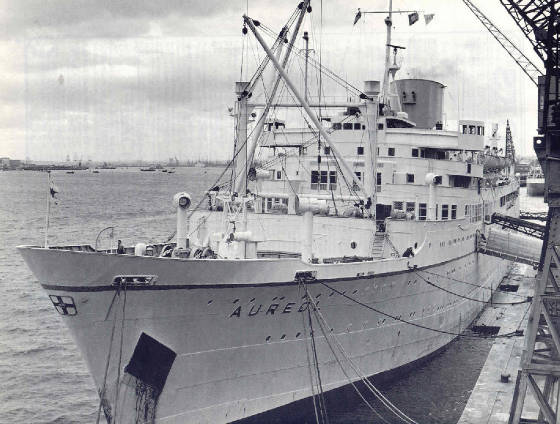
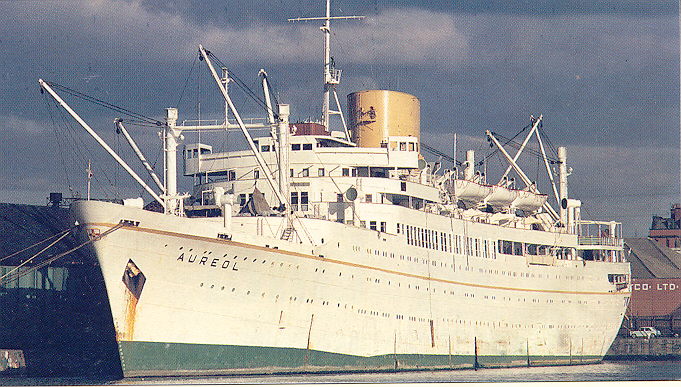
The former Elder Dempster liner AUREOL (1951/14,083 grt) - seen here at Southampton towards the end of
her career. Since her sale in 1974 she served as the accommodation ship MARIANNA VI based at Jeddah and then was ultimately laid up at Eleusis Bar near Piraeus.
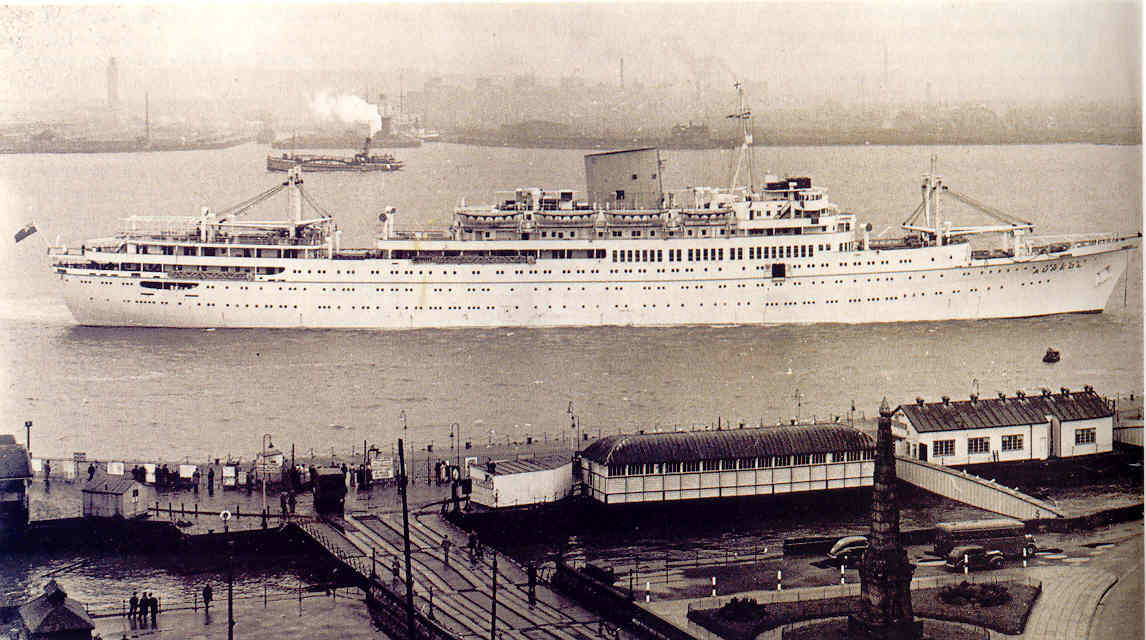
Above, AUREOL berthing at Liverpool Landing Stage shortly after delivery from Alexander Stephen & Sons Ltd in 1951.
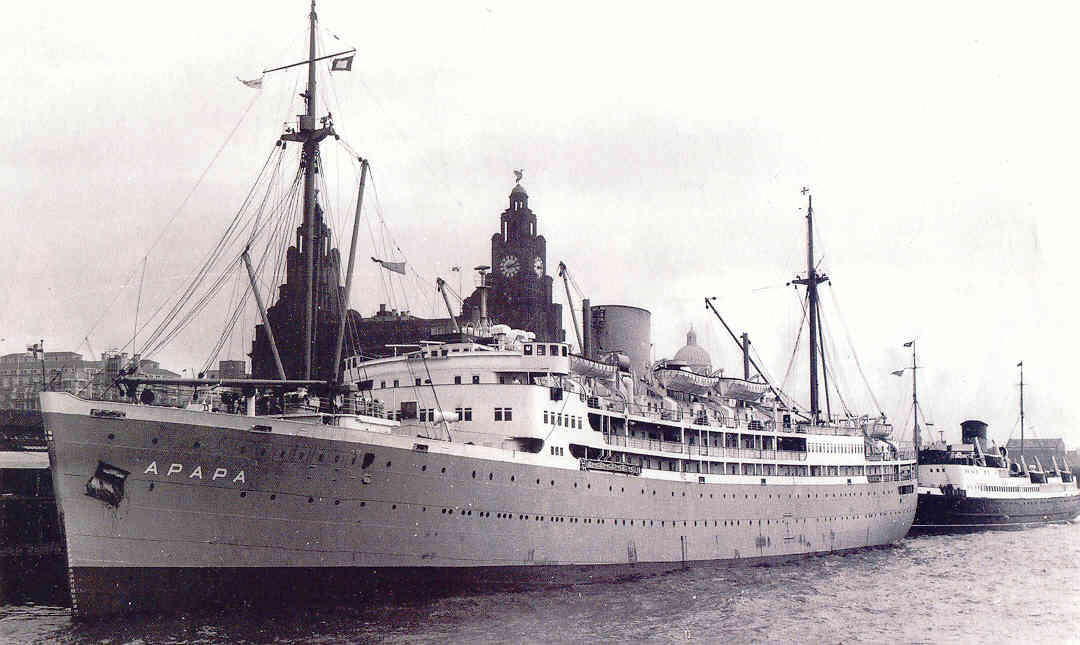
APAPA (1947/11,607 grt) at the Liverpool Landing Stage with an I.O.M. steamer astern.
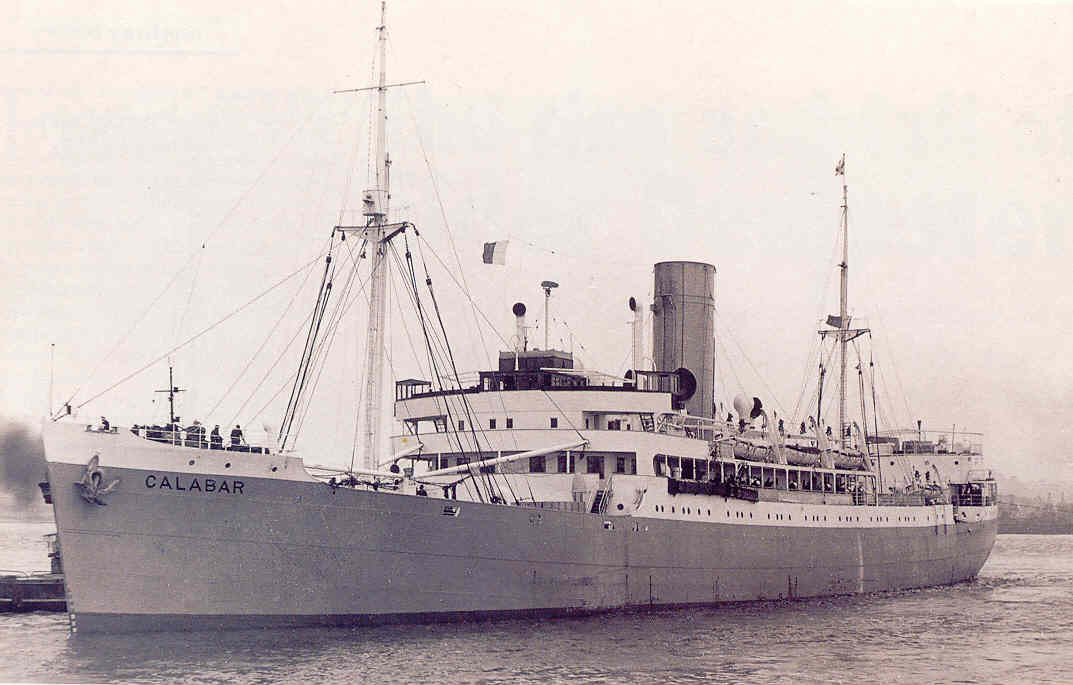
CALABAR (8,305 grt.1936) was used on the Tilbury to West Africa service between 1957 and 1962.
The name Elder Dempster was linked with the West African trade for well over a century - until 1969 when its title, Elder
Dempster Lines, and its final ship were sold to a Belgian concern, the CMB.
The OBUASI, above, was built by Harland & Wolff in 1952. In the Kylsant era (1909-1931) Elder Dempsters had pioneered
deep sea-going diesel engines for for OBUASI, engineering director Alan Bennett having decided that a five-cylinder B&W
single acting two stroke should be installed; it produced 3,750bhp and a service speed of 13 knots.
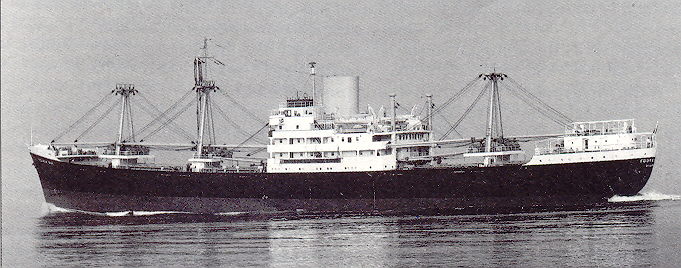
FOURAH BAY was a significant development for Elder's cargo-carrying fleet. She was designed by George Hunter and once again
showed how changing trade patterns affected the shape of ships. Not only had Elders invented their own innovations, namely
inert gas fire extinguishing (ONDO) and recirculatory heating systems for vegetable oils, (EGORI, 1957), but they used others
too. FOURAH BAY had an aluminium superstructure and three bi-pod masts.
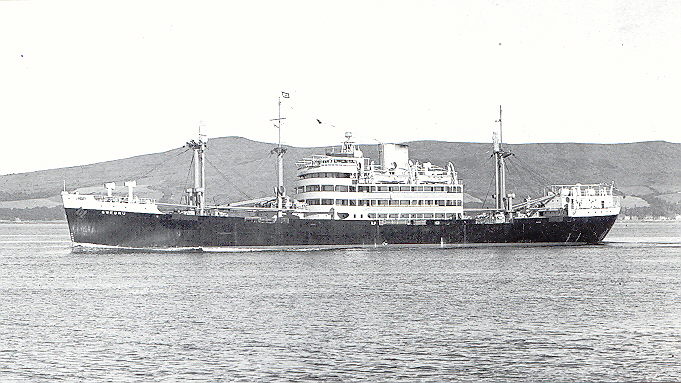
The company's post-war building programme started with the 'S' class, the SWEDRU (1947/4,809grt) being one of six motorships which had a listed speed of 12 knots and an overall length of 408ft. Others in this series were the SHERBRO, SALAGA, SHONGA, SEKONDI and SULIMA. Five of these went to the Guinea Gulf Line in 1965, the sixth in 1982. Distinguishing features were the open base to the massive centrecastle and the presence of three hatches between the forecastle and bridge.
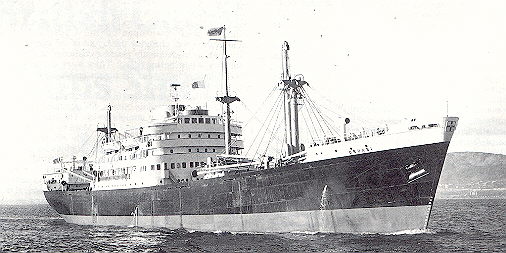
The EBOE (above) 1952/9357grt, and her sister EBANI were 16 knot, 12 passenger ships with a difference having been designated
for use between South and West African ports and North America. Their main recognition feature was the long bridge deck which
extended aft to the mainmast.
The ONITSHU above (1952/5,802grt) and OBUASI (also 1952) headed a group of five, all built at Belfast, which had a listed speed of 12.5 knots, a length of 450ft and a light draught of only 23ft. Three others, the OWERRI, OTI, and ONDO, which followed 1955-56, differed only in having a fractionally greater beam. The ONDO came to an untimely end by grounding off the German coast in 1961, but the others remained with the company until 1972
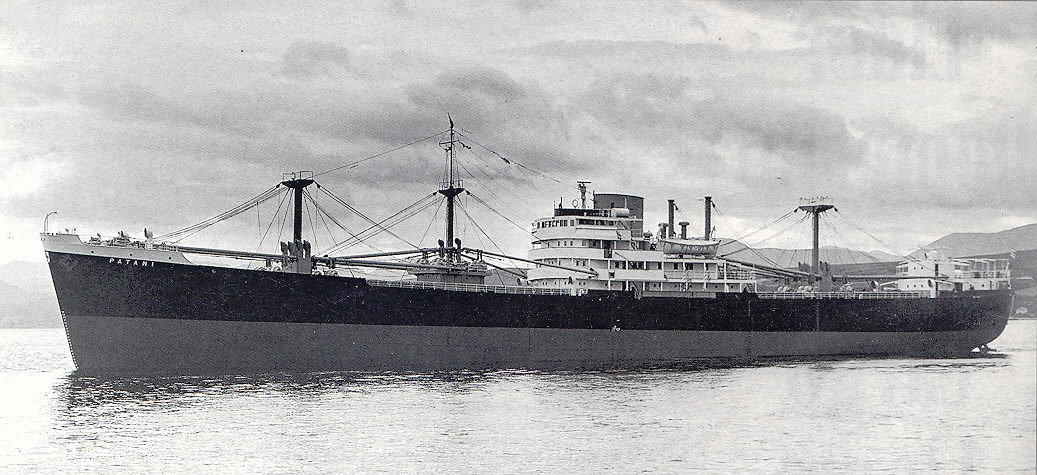
The PATANI (1954/6,181) and PERANG (1955) were built on the Clyde and North-East coast respectively. They too were 450ft
in length but with a dw tonnage of 10,000, needed more water, their draught being 26ft. Obvious recognition features were
the heavy hull lines, deep cruiser stern and low crosstrees. Brian Dickson (Guest Book entry) sailed as engineer with E.D.
and mentions that the masts were telescopic and the funnels had a removeable section to facilitate shipment through the Manchester
Ship Canal.
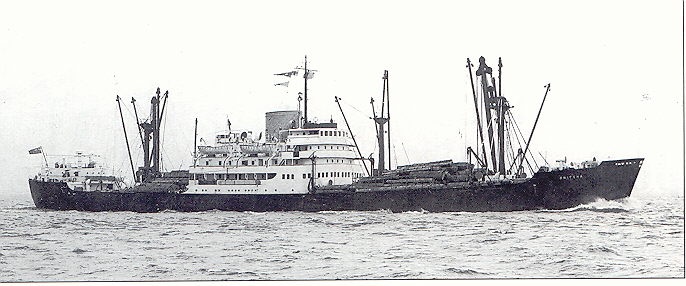
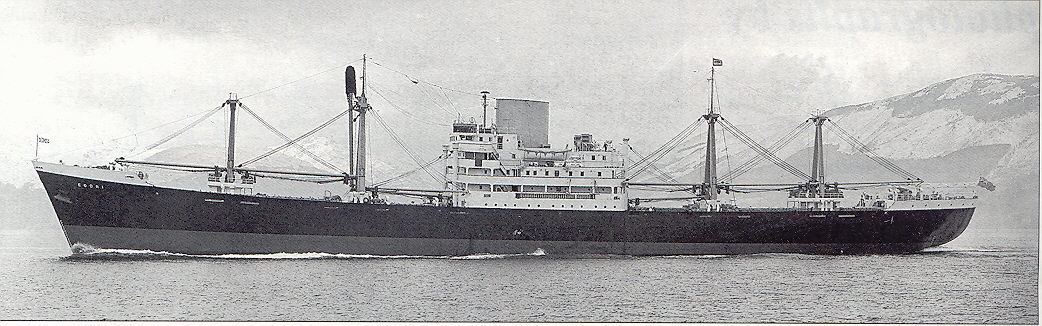
The EGORI (1957/8,506 was a one-off, but had hull dimensions, speed and machinery similar to the EBOE and, like her, was designed for trans-Atlantic service. Noteworthy in being the first Elder Dempster ship to have bipod masts, she had other distinctive features - in the pronounced sheer right forward, short centrecastle and very sloping cruiser stern. Kept for 21 years, she saw brief service as the AZIZ before being broken up.
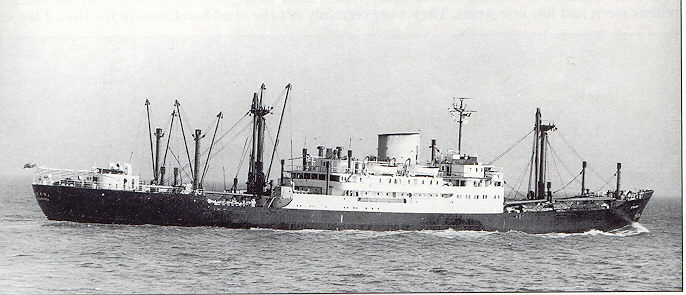
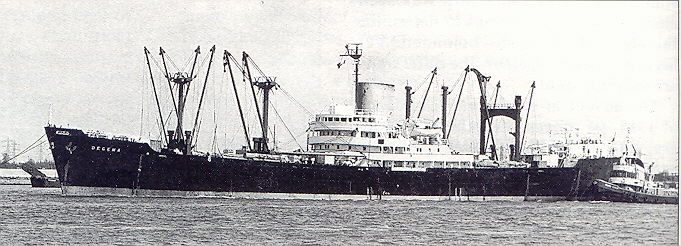
The DEGEMA (1959/5,902) was the second of a faster (14-knot) class of six, the others being the DARU (1958), DIXCOVE, DUNKWA, DEIDO and DUMURRA. All had a length of 460ft and a draught of just over 26ft. The three later ships were given slightly more beam, their breadth being 63 ft. The ships came from several yards, hence minor variations in detail. The DEGEMA is shown after she had been given heavier kingposts aft. All were sold 1979-81.
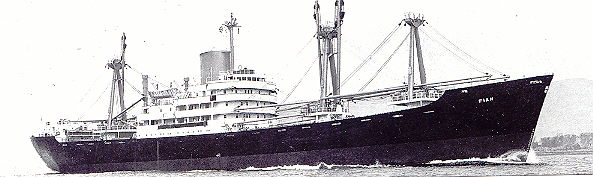
The FIAN (1964/6,783) which rounded off the six-ship FOURAH BAY Class, was the final conventionally shaped cargo liner to
be delivered to Elder Dempster. Others in this 16 knot group were the FOURAH BAY (1961), FALABA, FORCADOS, FULANI, and FREETOWN.
Ships of just over 8,100 tons dw, they were 465ft in length and had a modest draught of some 25ft.
The progressive merger of Elder Dempster's sea staff and Blue Funnel's to become a common manning force meant that the need
for two cadet ships, in times of a changing syllabus, became superfluous. From 1973 onwards, with the transfer of AUREOL
to a singleton service between Southampton and Lagos, the Polish-built New 'S' Class took over the scheduled services.
Please scroll to the top left for a new selection or return to the original menu. |
||||||||||||||||||||||||||||||||||||||||||||||||||||||||||||||||||||||||||||||||||||||||||||||||||||||||||||||||||||||||||||||||||||||||||||||||||||||||||||||||||||||||||||||||||||||||||||||||||||||||
|
||||||||||||||||||||||||||||||||||||||||||||||||||||||||||||||||||||||||||||||||||||||||||||||||||||||||||||||||||||||||||||||||||||||||||||||||||||||||||||||||||||||||||||||||||||||||||||||||||||||||
|
|
|
|